
Getting Started
Tutorials
Workflows
Conceptual Model
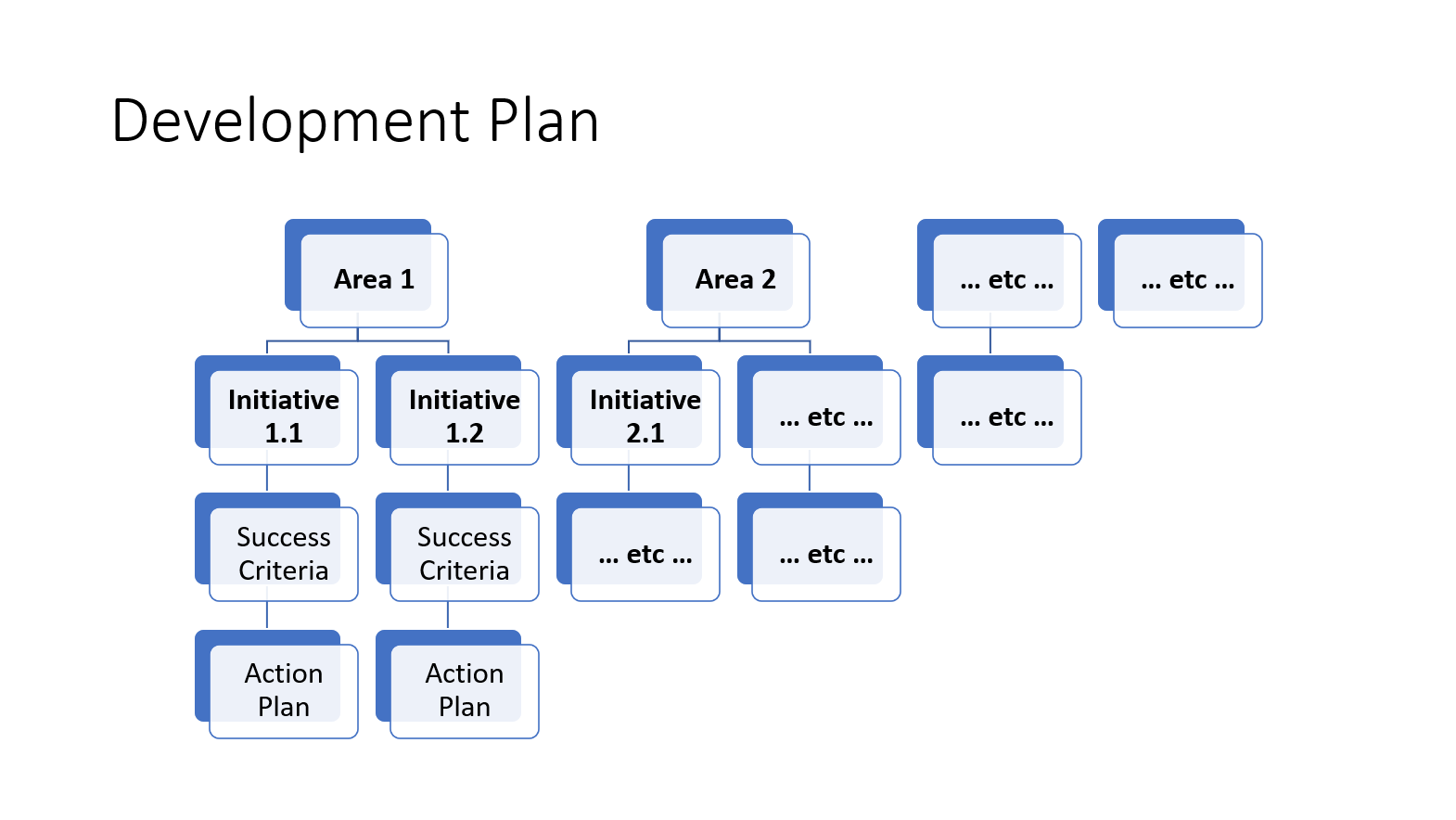
The Development Planning module structures school-wide strategic improvement through a clear, multi-tiered hierarchy connecting high-level institutional goals with day-to-day operational execution:- Development Plans: Top-level strategic documents created for specific academic years (e.g. Whole School Development Plan 2026/27, Primary Phase Improvement Plan, English & Literacy Department Plan, Premises & Digital Strategy). Each plan can be designated as the Main Plan (pinned to the top of lists) or Paused during initial drafting.
- Strategic Context Statements: Introductory narrative sections at the front of each plan detailing the school’s background, demographic profile, prior inspection findings, and overarching strategic imperatives.
- School Targets: Quantifiable performance benchmarks (e.g. KS2 SATs outcomes, GCSE progress 8 metrics, persistent absence reduction) evaluated using clear progression stages (
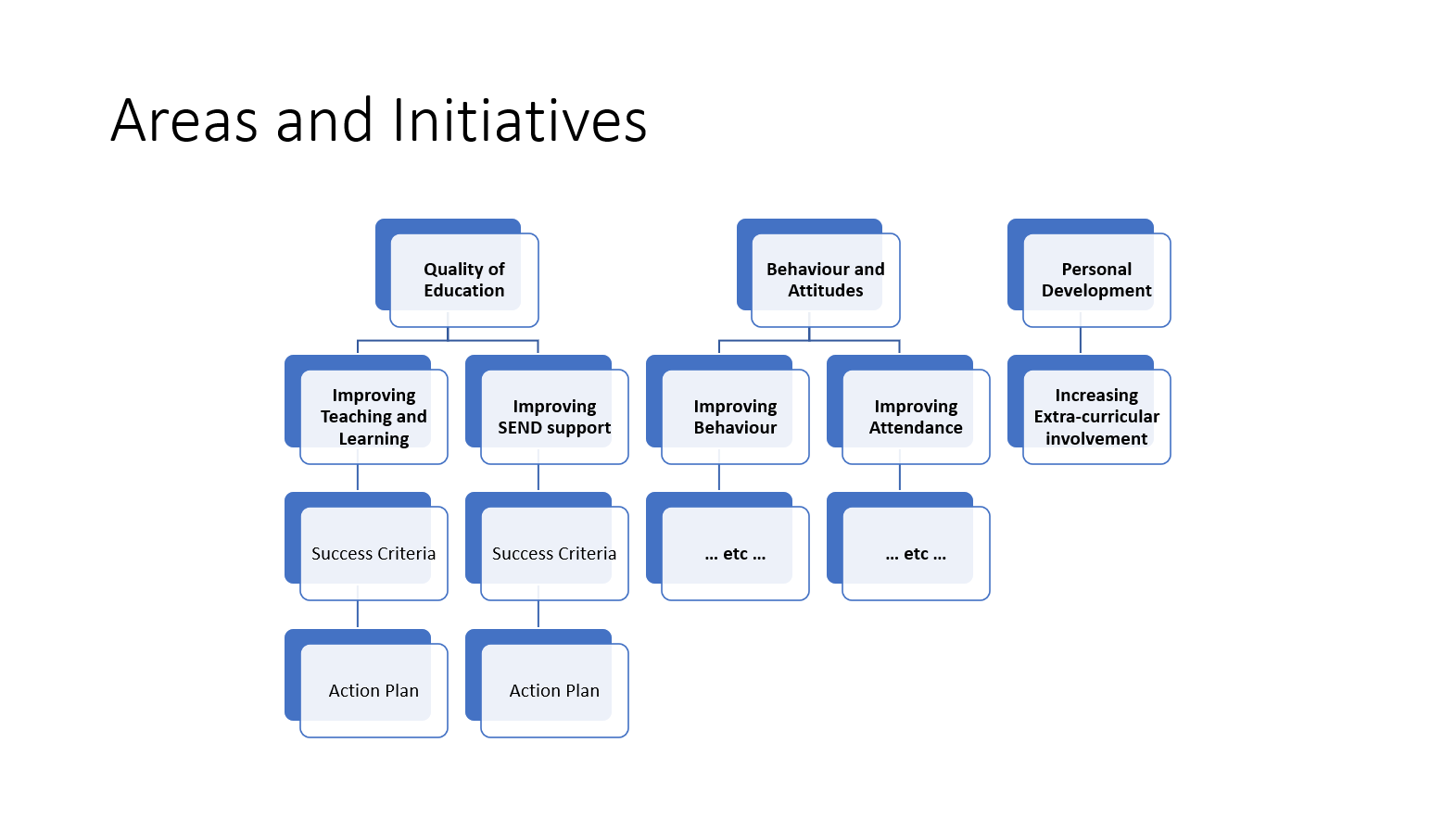
Not started,In progress,Not met,Partially met,Met). - Development Areas (Themes): Thematic groupings within a plan (e.g. Quality of Education, Behaviour & Attitudes, Personal Development, Leadership & Management, Early Years Foundation Stage). Areas can be populated from central school themes or synchronised across a Multi-Academy Trust (MAT).
- Development Initiatives: Strategic projects or improvement priorities within an area, typically led by senior or middle leaders. Each initiative features:
- Core Information: Comprehensive summary detailing the initiative’s Rationale (the strategic problem being solved), Resources (budget, staff time, CPD requirements), and Monitoring (governor oversight mechanisms and evidence sources).
- Success Criteria: Evaluative milestone statements with progression ratings and qualitative notes.
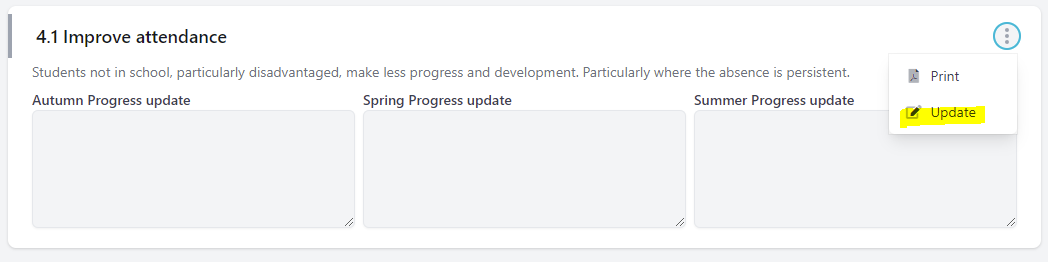
- Termly Progress Updates: Qualitative reviews recorded across Autumn, Spring, and Summer terms for governor scrutiny and leadership reporting.
- Action Plans: Concrete, time-bound tasks assigned to named staff members with specific due dates, notes, and completion toggles.
Visual Status Indicators
To maintain immediate visual clarity across dashboards and executive summaries, the module employs distinct colour-coded indicators:- Action Progress Bars:
- Green (Complete): Actions that have been completed by their assigned owner.
- Amber (Due Soon): Actions scheduled for completion within the next 14 days.
- Red (Overdue): Incomplete actions whose due date has passed.
- Slate / Grey (Not Yet Due): Future actions scheduled beyond 14 days.
- Target & Success Criteria Ratings:
Not started: Baseline state prior to implementation.In progress: Active work underway with initial evidence.Not met: Outcome criteria not achieved during evaluation.Partially met: Key elements achieved, with remaining areas for development.Met: Fully realised target or success criterion.
- Special Plan Badges:
- Double Green Tick: Marks the school’s primary Main Plan, prioritising it at the top of all listings.
- Pause Icon: Indicates an active plan is in draft mode with automated owner alert emails temporarily suspended.
Roles & Permissions Matrix
The module provides role-based access control to support distributed leadership while safeguarding strategic plan integrity:- Administrator
- Development Manager
- Development Owner
- Development Supporter
- Development Viewer
System Governance & Setup
- Enable or disable the Development Planning module across the school tenant.
- Assign and revoke the
Development Managerrole for senior leadership. - Receive automated system alerts if the module is enabled without an active manager.
- Full administrative oversight across all plans, themes, and configuration settings.
Operational Screen Tour
1. Dashboard Summary Widget
Users with Development Planning permissions see an instant summary widget on their personal dashboard. The widget visualises the overall completion progress of all active school plans alongside a direct counter of actions specifically assigned to the logged-in user.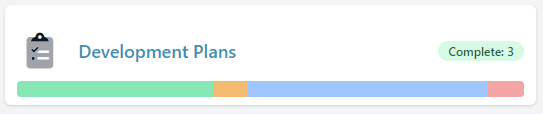
2. Development Plans Hub (/development/plans)
The main landing page displays all active school development plans:
- Plan Cards & Progress Bars: Proportional indicators showing completed, due, overdue, and pending actions.
- Main Plan & Pause Badges: Identify the primary plan and draft plans with paused notifications.
- Plan Actions: Create new plans, copy existing plans, or access central MAT templates.
- Quick Navigation: Direct button to access the master school-wide Actions review table.
3. Plan Overview & Areas (/development/plan/{plan})
Clicking any plan opens its complete architectural view:
- Area Panels: Visual breakdown of each development area with aggregate progress indicators.
- Constituent Initiatives: Expandable initiative summaries showing core rationale and success criteria.
- Strategic Jump Links: Fast access to the plan’s Contexts statement and Targets registry.
- Customisable PDF Print: Export full or modular PDF dossiers configured specifically for governors, SLT, or staff teams.
4. Contexts & Targets (/development/plan/{plan}/contexts & .../targets)
Establish high-level strategic alignment at the front of the plan:
- Contexts: Author introductory background statements, strategic priorities, and school demographic summaries (formatted for a concise single A4 page when exported).
- Targets: Define measurable performance indicators with status evaluation (
Not started,In progress,Not met,Partially met,Met) and evaluative commentary.
5. Development Area Detail (/development/plan/{plan}/{area})
Focus on a specific strategic domain:
- Initiative Management: Add, edit, or reorder initiatives using drag-and-drop handles.
- Strategic Metadata: Record and review high-level rationale, resource implications, and monitoring mechanisms for each initiative.
- Area Export: Print a focused operational PDF report for departmental or committee meetings.
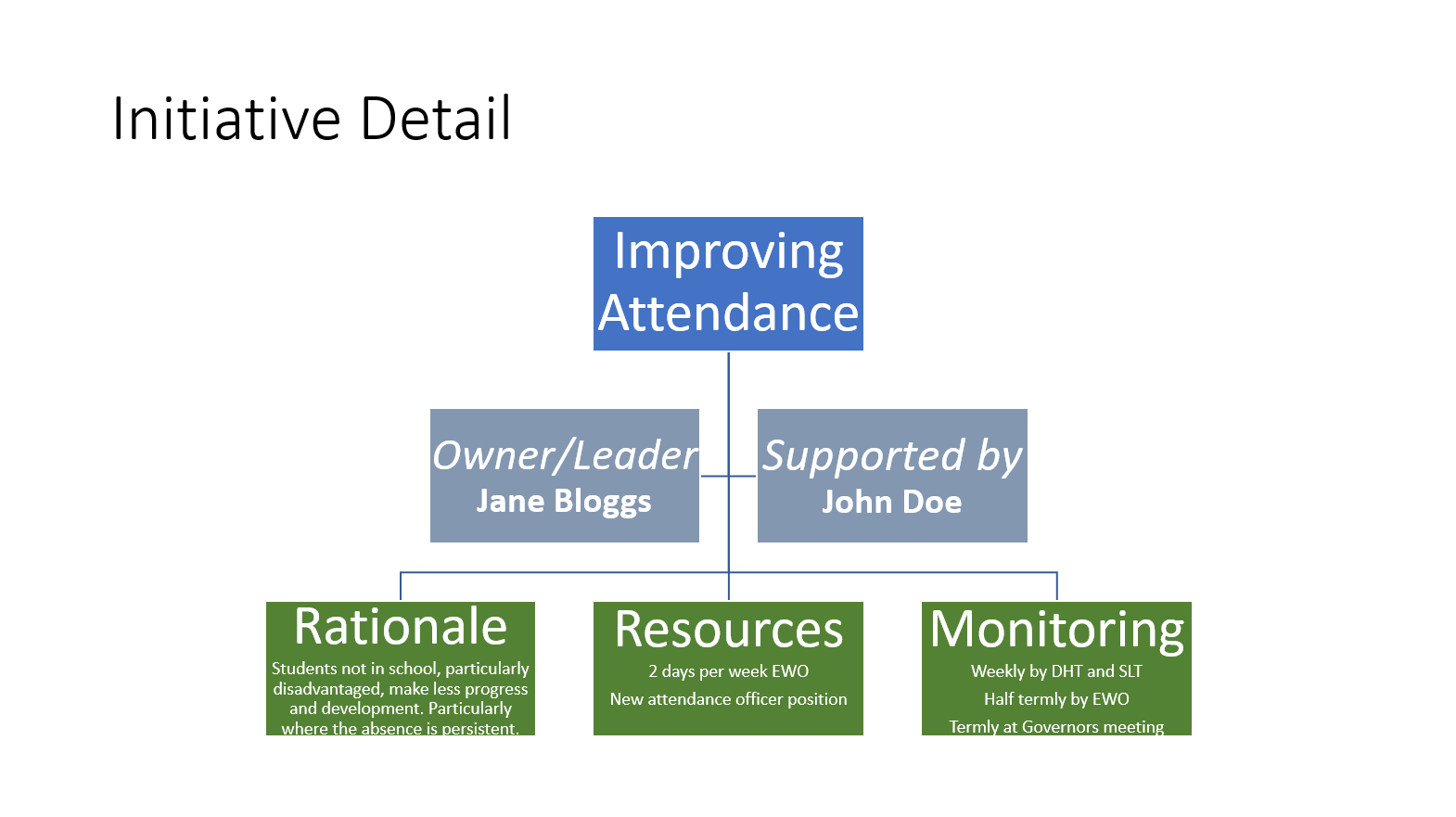
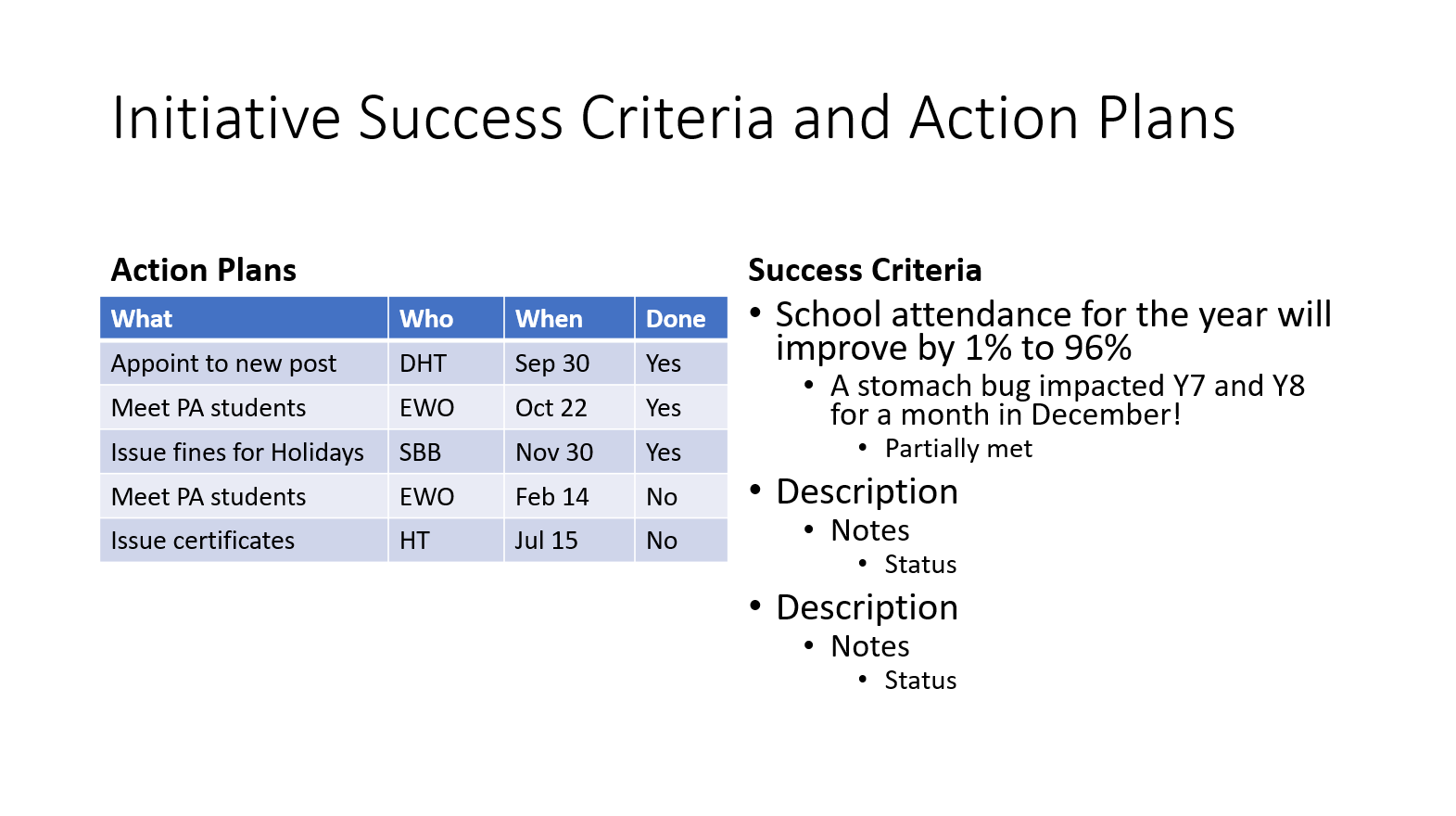
6. Initiative Detail, Criteria & Actions (/development/plan/{plan}/{area}/{initiative})
The core operational engine of school improvement:
- Success Criteria Matrix: Define and evaluate concrete impact measures with status badges and qualitative evidence notes.
- Termly Progress Reviews: Record narrative progress updates for Autumn, Spring, and Summer terms.
- Action Plan Table: Manage granular tasks with assigned owners, due dates, completion checkboxes, and progress notes.
7. Master Actions Review (/development/plans/actions)
A centralised, searchable master view of every action across all active school plans:
- Multi-Criteria Filtering: Filter by specific Plan, Owner, or Completion Status (All, Due Soon, Overdue, Complete, Incomplete, Not Yet Due).
- Search & Quick Edit: Search action descriptions and update statuses or notes directly without navigating through multiple pages.


8. Theme, User & Calendar Administration (/admin/development/*)
Accessible to Development Managers and Administrators:
- Development Themes (
/admin/development/areas): Define standard areas, configure display order, or link with central MAT templates. - Owners & Viewers (
/admin/development/owners&.../viewers): Manage staff delegation and governance read-only access. - Academic Calendar Years (
/admin/development/years): Configure school academic years, term dates, and half-term holiday blocks.

Automated Notification Schedule
The module provides proactive automated email alerts to ensure deadlines are met and leadership remains informed:To prevent notification spam while drafting or restructuring a plan, managers can Pause the plan. Paused plans suspend real-time action update notifications while retaining weekly digest reminders.
Multi-Academy Trust (MAT) & Group Coordination
For Multi-Academy Trusts, federations, and local authorities coordinating school improvement across multiple institutions:- Centrally Defined Development Themes: Trust central leadership can establish standard strategic themes (e.g. trust-wide education standards, digital strategy, estates sustainability) and synchronise them across all member schools.
- Central Plan Repository & Template Cascading: Maintain master development plans at the trust level. Individual academies can view central plans and clone them with one click to adopt trust initiatives while tailoring actions to local school contexts.
- Central Calendar Alignment: Align academic years and term blocks centrally across the trust while permitting individual schools to adjust local term dates and inset days.